“Underground,” when the New York subway
was a cultural manifesto.
Cream-colored train cars covered in raised pink and purple letters. Doors that opened onto backlit figures, amid flashing neon lights and the smell of iron and mold. The New York subway, between the late 1980s and early 1990s, was not just a transportation system. It was a landscape.
For years, the iconography of the New York subway in the 1980s and 1990s has circulated on social media as an inexhaustible repertoire. Cars covered in graffiti, spray-painted police officers, platforms lit by neon lights. Thousands of likes and shares, the same implicit question in every post: what was there in that city that no longer exists? The soundtrack is almost always the same: “NY State of Mind” by Nas, a 1994 song whose very title proclaimed a sense of territorial and mental belonging.
But who exactly is this imagery aimed at?
And, above all, what does it hold in store for us in 2026?
The subway as a no man’s land
To understand this, we need to go back to the facts. Between 1977 and the early 1990s, the New York subway underwent a profound crisis. Cuts in public funding, rising crime, and neglect of infrastructure transformed the subway into a separate territory, governed by its own rules. The trains became moving canvases: artists like Dondi, Seen, Lady Pink, and Futura 2000 covered them with elaborate works, often created at night in the depots,
risking arrest and accidents. It wasn’t decoration. It was an act of presence in a public space that had ceased to function as such.
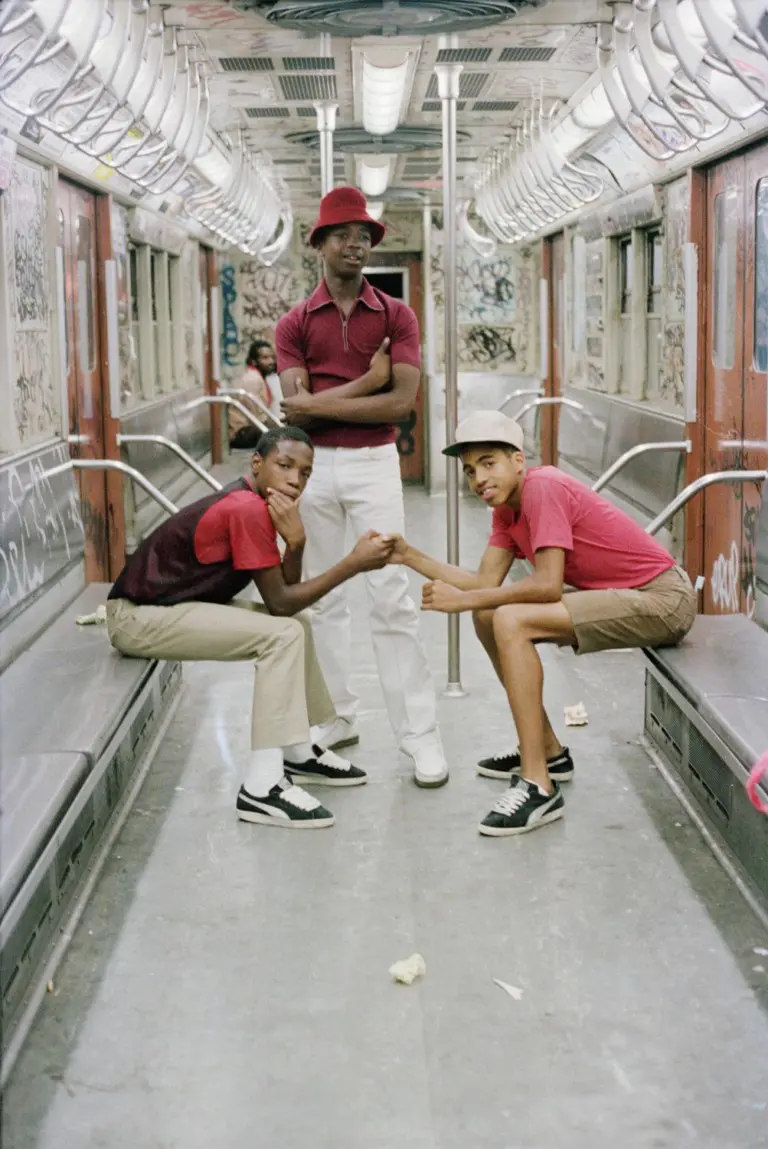
Jamel Shabazz | Faces from the Underground, NYC (1980)
A cultural ecosystem on rails
At the same time, a broader cultural ecosystem was taking shape in the stations and train cars. Breakdancers performed between stops, beatboxers filled the platforms with rhythm, and the first MCs improvised rhymes that would become the backbone of hip hop. The subway was the physical link between neighborhoods that the city officially kept separate: the Bronx, Brooklyn, Harlem, the Lower East Side. Underground, literally and culturally.
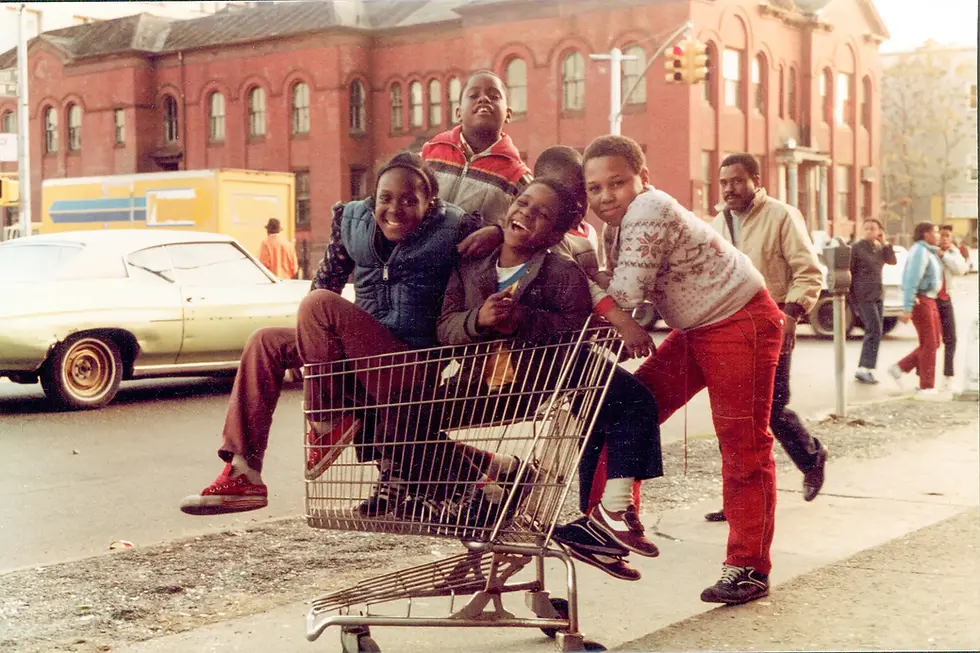
Jamel Shabazz, A time of innocence. Flatbush, Brooklyn, 1981. C-Print, 16 x 20 inches. Courtesy the artist.
Recovery and What Is Lost
In 1989, the MTA launched its “Clean Car” program, which, within a few years, systematically removed graffiti from train cars. The operation was considered a success in terms of public order, part of a broader “zero tolerance” strategy that would redefine New York in the 1990s. The trains were clean again. But something, along with the paint, was erased.
An archive that never stops speaking
What remains, thirty years later, is a powerful visual archive.
The photographs by Martha Cooper and Henry Chalfant (compiled in the 1984 volume “Subway Art,” still considered one of the most influential books in the history of urban culture) captured that era in an iconography that continues to generate references. They document a moment when urban decay and creative expression were indistinguishable, superimposed on the same metallic surfaces.
Nostalgia as a promise of authenticity
And it is precisely this overlap that makes the theme so appealing to Generation Z. A generation raised in increasingly policed, clean, and optimized cities finds in these images a promise of radical authenticity. The graffiti-covered train cars are the opposite of contemporary public space: controlled, branded, free of unauthorized signs. The nostalgia circulating on social media is obviously not for danger or discomfort, but for the idea that there once existed a place where creativity could flourish without permission.
The fine line separating document and fetish
The risk, of course, is that of any retroactive aestheticization: separating the image from its context. Those who lived in that subway every day—night-shift workers, families from working-class neighborhoods, the elderly—did not traverse it as if it were a photo shoot. It was urban survival, collective exhaustion. But in the transition from lived experience to visual content, the line between document and fetish becomes blurred.
From crisis to style: a repeating cycle.
It’s a familiar dynamic in the history of pop culture. London punk, pre-reunification Berlin, post-industrial Detroit: every scene born of crisis, sooner or later, goes through the cycle that transforms it into an aesthetic. The visual codes survive, the social context evaporates. What remains is a powerful and recognizable style, available to be referenced, sampled, and used
In the case of the New York subway, this process is already well established. Graffiti on trains has become a cross-cutting reference: from fashion (just think of Supreme’s collections or collaborations between brands and legendary graffiti artists) to music, graphic design, and even the architecture of social media platforms themselves, where the carousel format with archival images and overlaid text replicates, in digital form, the logic of a work of art on a train car. To occupy visual space, to be noticed, to exist.
The laboratory that never closes.
Perhaps that is the point. The New York subway of the 1980s and 1990s is not just a closed chapter in American urban history. It is a model. The first major example of how a degraded public space can become the laboratory for an entire culture. And the fact that it continues to generate content, conversations, and a sense of belonging, more than thirty years after its “recovery,” says something not only about that New York, but about what we seek today in the spaces we inhabit.
The train cars are clean now. But the urge to write on them has never disappeared.





Comments