An upper-floor apartment in a building on East Fourth Street, between Avenue A and B. To head up the stairs, you have to give advance notice: the local kids protect those who live there.
On the fifth floor, a twenty-four-year-old with red lipstick and a faux beauty mark opens the door, serving espresso and bubblegum on a silver tray.
Her name is Madonna Louise Ciccone.
In six weeks, she will release her first album. But today, she is still just the girl from the Funhouse and Danceteria, DJ Jellybean Benitez's girlfriend—the one paying her rent by waitressing and posing nude for art students.
66 Shots with an SX-70
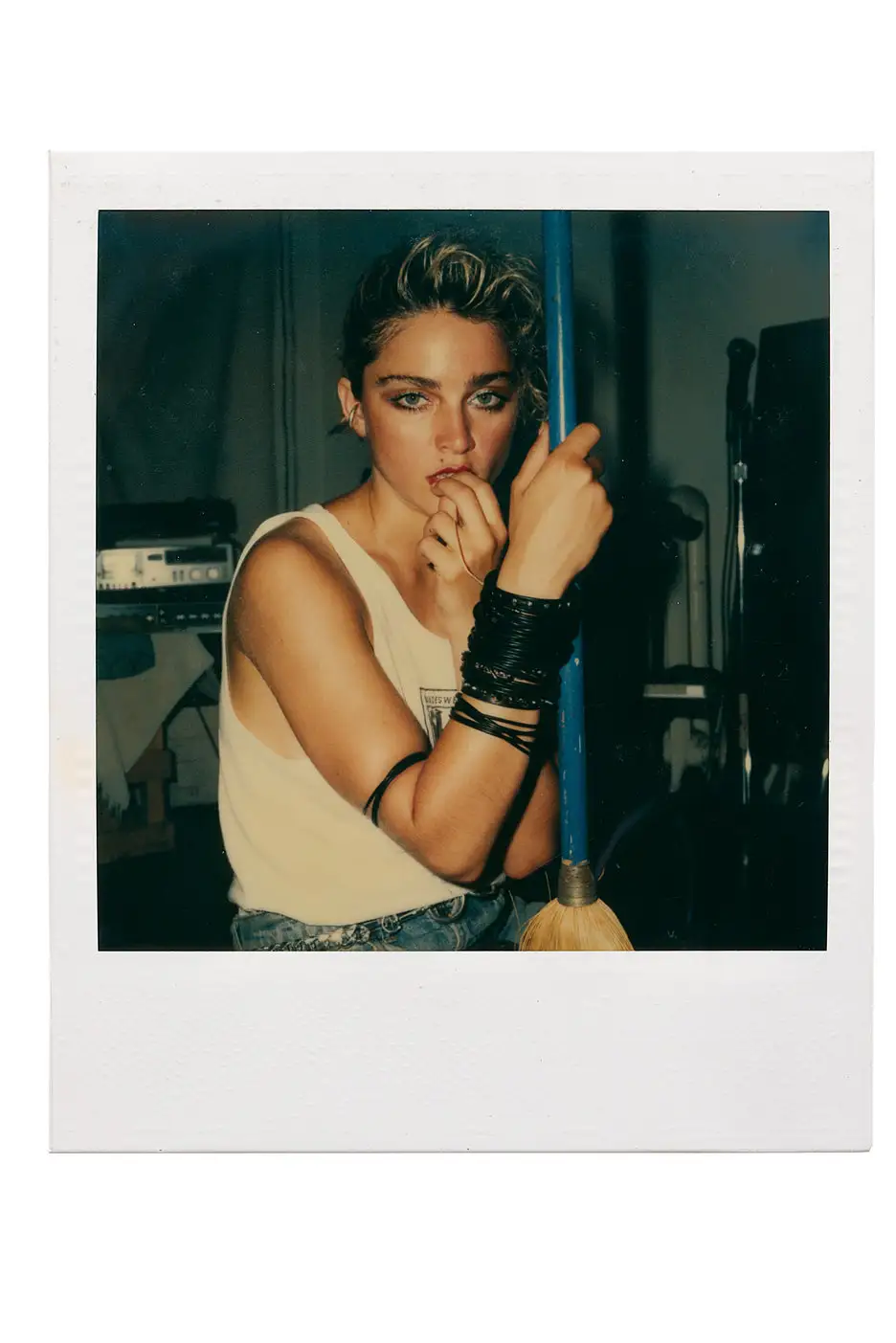
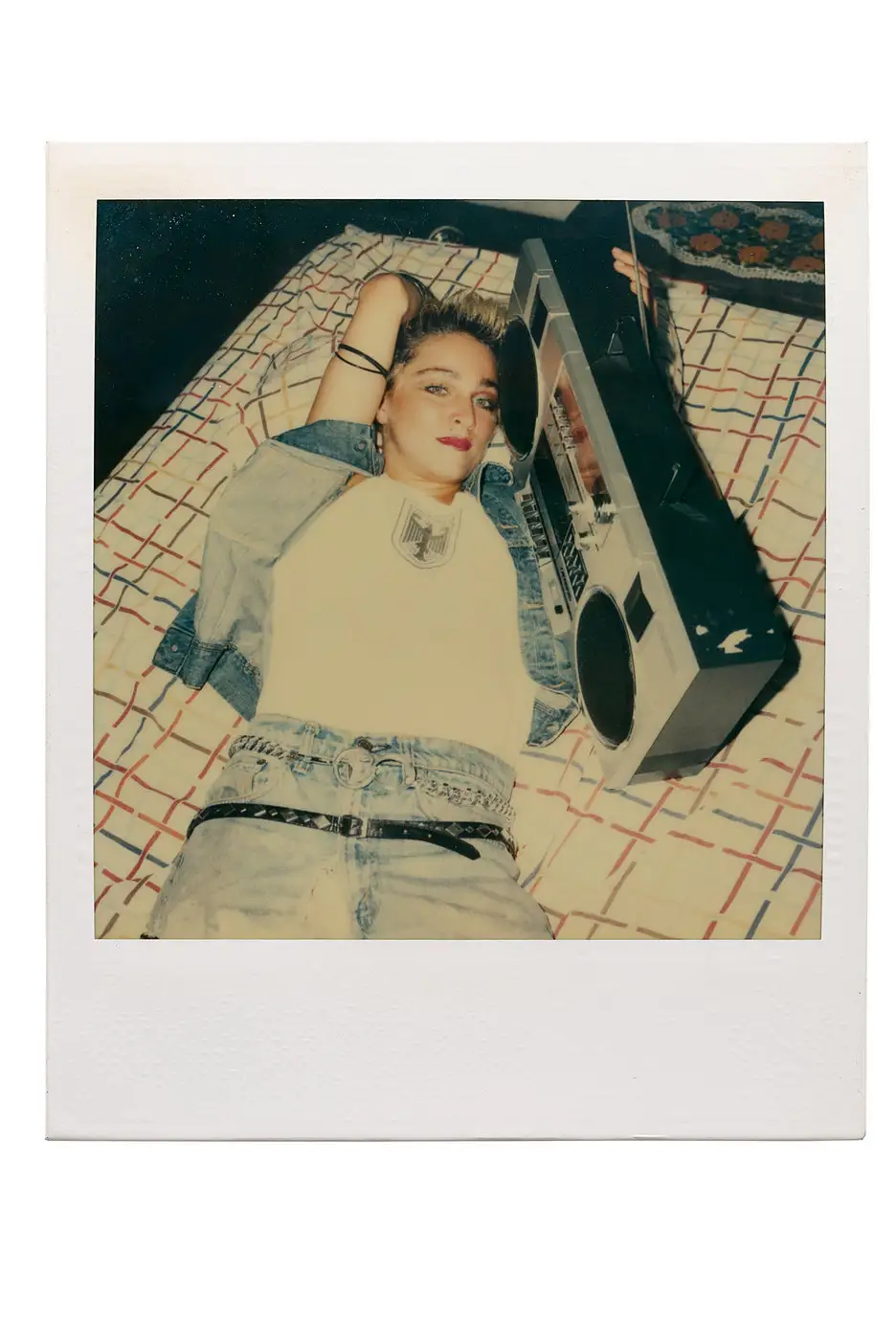
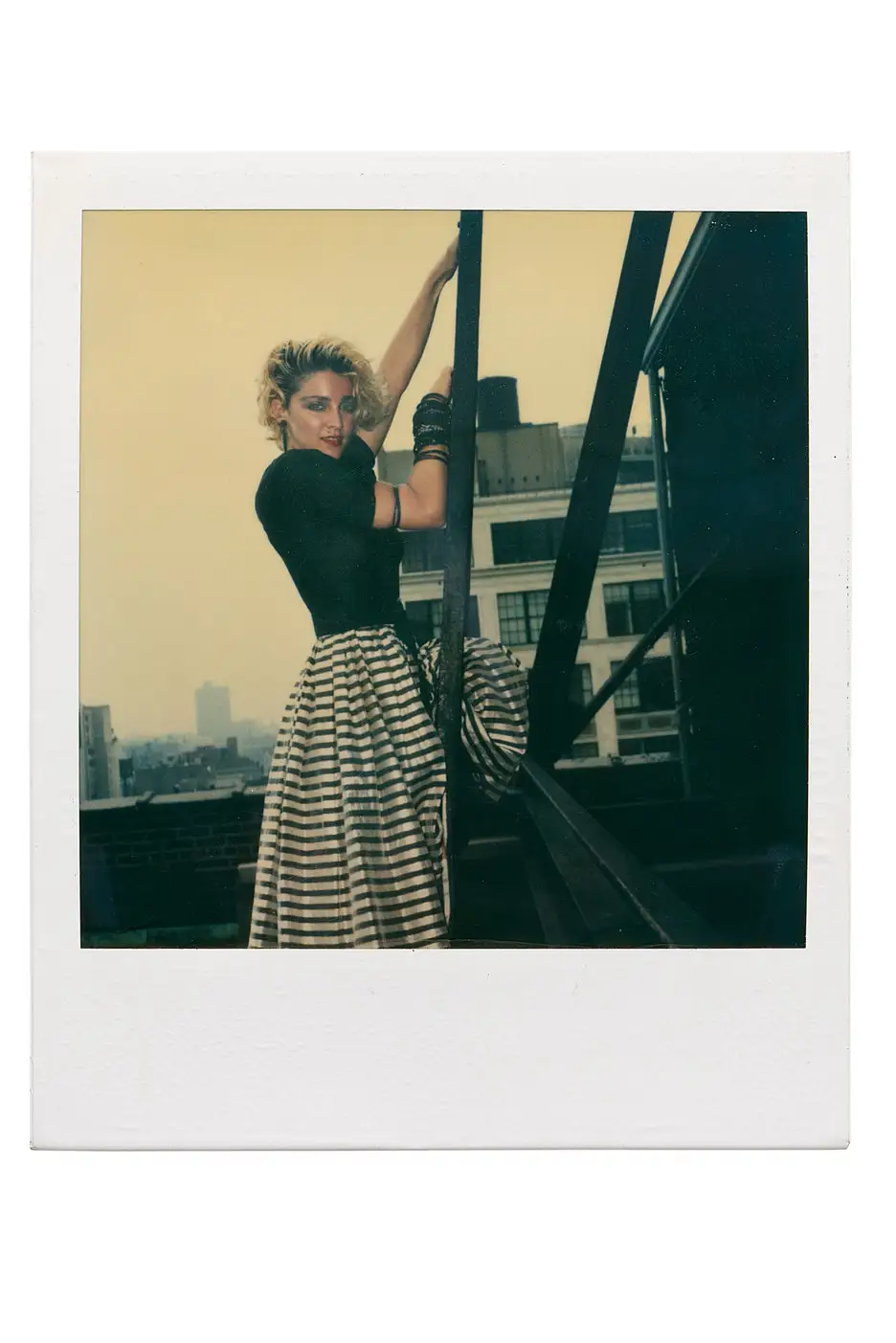
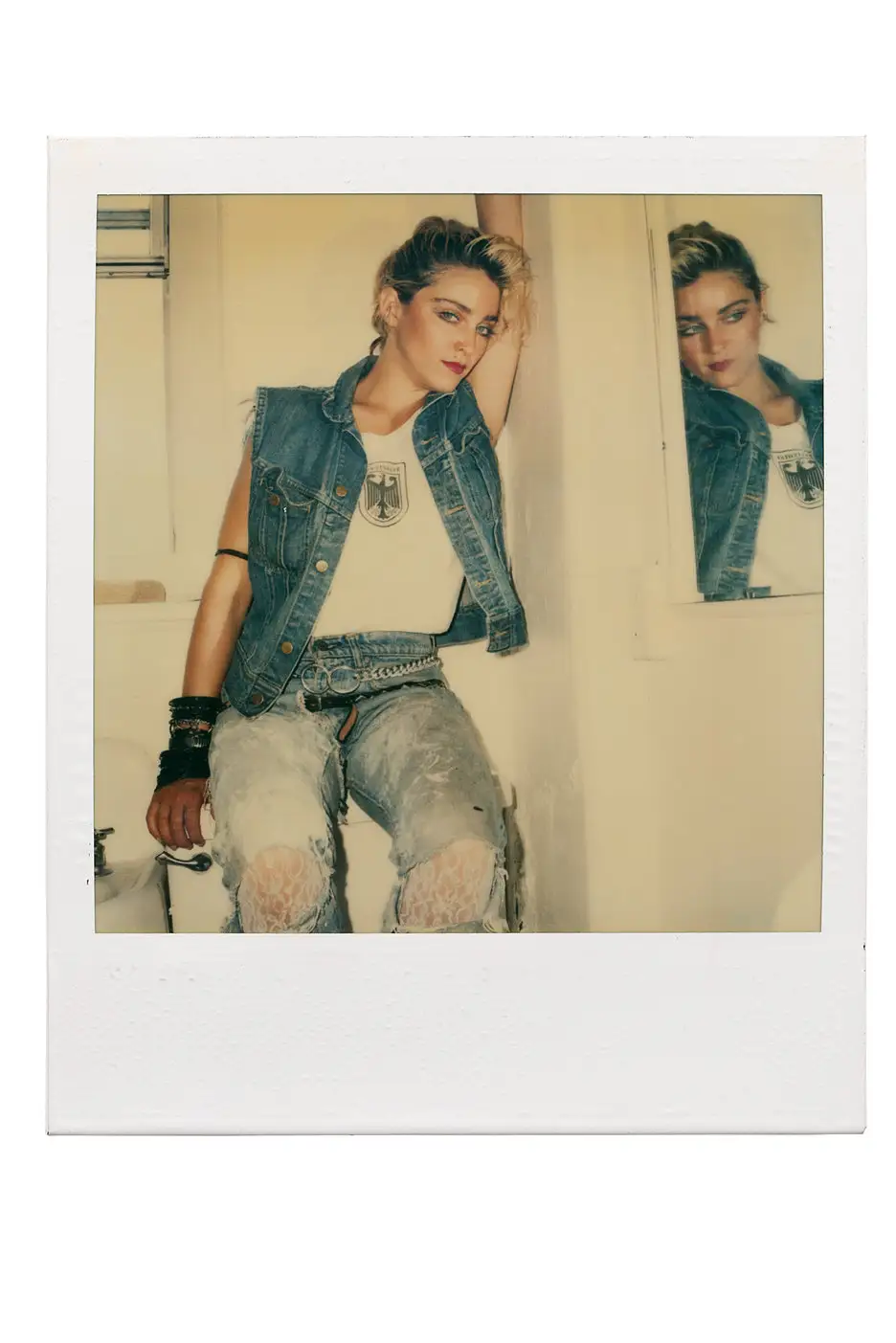
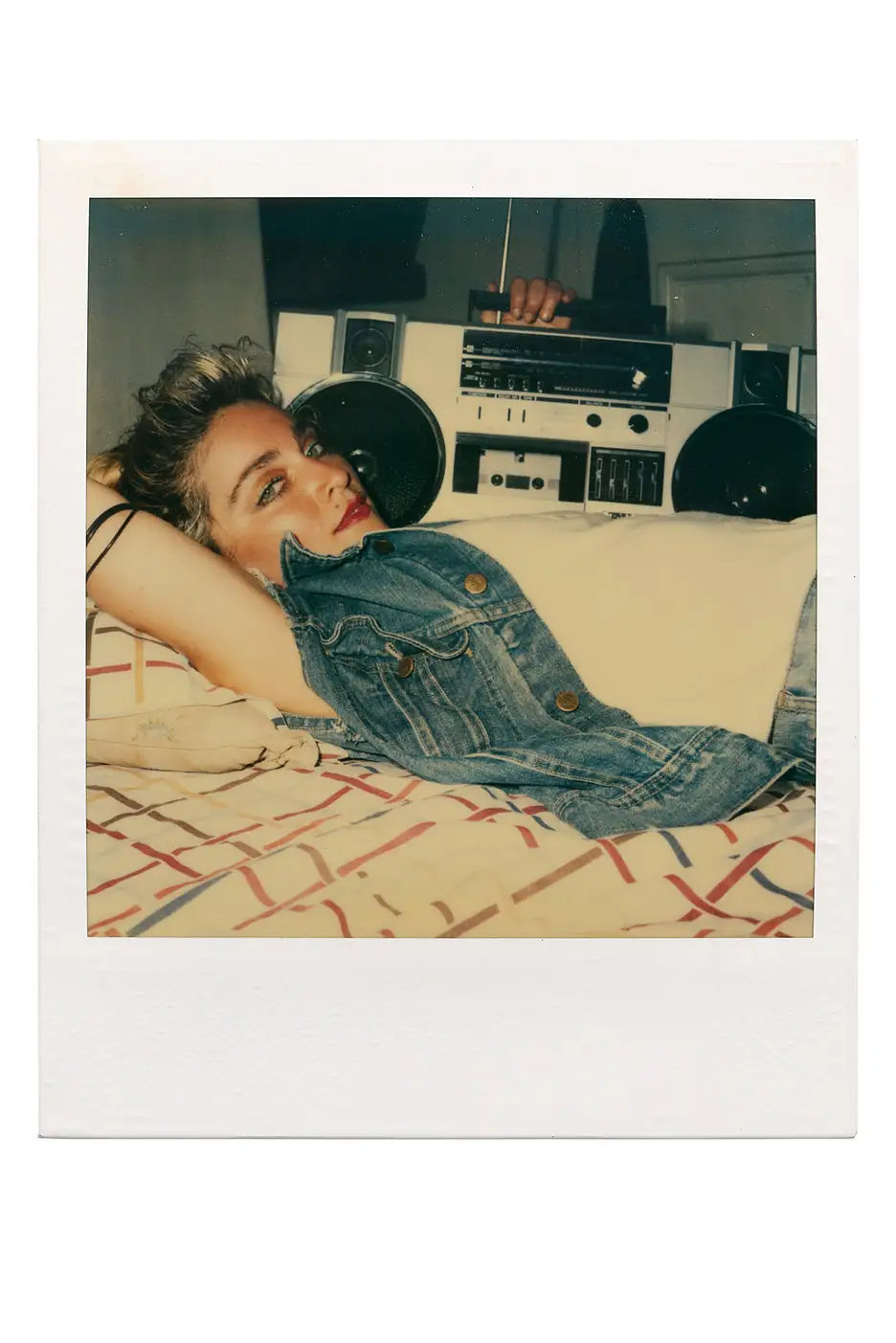
The photographer climbing those stairs is named Richard Corman. He is twenty-nine years old, fresh from an apprenticeship at Richard Avedon’s studio, and he knows Madonna through his mother, Cis Corman. Cis is a casting director who has worked with Martin Scorsese on films like Raging Bull and The Deer Hunter. She is looking for a lead for “Cinde Rella – A Rock Fable,” a film project reimagining the classic fairy tale as a musical: no glass slipper here—it’s the protagonist's voice that reveals her identity to Prince Charming, and the happy ending is a record deal instead of a wedding. The film will never be made. But that day, in the apartment of Madonna’s brother, Christopher, Corman shoots 66 Polaroids with an SX-70, spread across five different setups.
An Unwitting Trendsetter
These are instant images—unmanipulated, unretouched. Madonna is wearing what would soon become the visual vocabulary of an entire generation: distressed jeans, a sleeveless denim jacket with graffiti on the back, and rubber bracelets. But in June 1983, that look wasn't a "code" yet. It was simply how a girl from the East Village dressed when she had no money but possessed an infallible instinct for image.
Raw, Like the Subject
Corman chose the Polaroid for the same reasons Andy Warhol did: immediacy, uniqueness, and a lack of mediation. Each shot is a one-of-a-kind piece, with no negative and no possibility of duplication. In an interview with the New York Times, Corman described those images as "untouched and raw," much like the subject herself. There is no distance between the photographer and the photographed. Madonna looks into the lens with a confidence that isn't yet manufactured. It is pure charisma, captured before being codified into a global brand.
The East Village Before the Myth
The setting is the East Village of the early 1980s, a neighborhood that was simultaneously dangerous and magnetic. Keith Haring is painting on walls. Jean-Michel Basquiat is working in his studio on Great Jones Street. Kenny Scharf, Ann Magnuson, and the entire Club 57 crowd on St. Mark's Place walk these same streets. Corman himself, during this period, photographed both Haring and Basquiat. The East Village isn't a cultural heritage site yet; it’s a physical space where penniless artists live, produce, and cross paths, protected by the neighborhood's commercial irrelevance. Within this fabric, Madonna is not an anomaly. She is one among many. The difference is that, six weeks after that shoot, her debut album (featuring Holiday, Lucky Star, and Borderline) catapults her into another dimension. The album would go on to sell five million copies. A year later, her performance of Like a Virgin at the MTV Video Music Awards definitively transforms her into a global phenomenon.
Thirty Years in a Warehouse
Meanwhile, the 66 Polaroids ended up in a warehouse. They stayed there for thirty years. Corman rediscovered them and, in 2016, published them in a limited edition art book, Madonna 66: 164 pages, a pink hardback cover, held together by a thick black elastic band (a nod to Madonna’s bracelets). The book was hailed by the New York Times, Vogue, Vanity Fair, Harper’s Bazaar, and Elle. The entire set of 66 original Polaroids was later put up for sale by Manhattan Rare Books for $350,000.
The Last Moment Before the Icon
The value of these images, however, isn't just for collectors. It is documentary. Corman’s Polaroids capture a moment that, by definition, cannot be repeated: the last instant before a person becomes an icon. After that June, Madonna would never be accessible in that way again—not to a photographer, not to a camera, not to anyone. The spontaneity Corman captures is that of someone who has no reason yet to protect themselves from the lens, because the lens is not yet a weapon.
Identity Before the Image
There is a broader issue here regarding the nature of photography as a cultural record. We live in an era where the image precedes identity: the visual persona is constructed first, and the content follows (perhaps) later. In 1983, the path was reversed. Madonna had the music, the ambition, and the style, but she didn't yet have the public image. Corman’s Polaroids document that "void"—a void that is simply impossible today in the age of digital hyper-visibility.
Those 66 snapshots don't tell the story of who Madonna would become. They tell the story of who she was when no one was watching.
That is exactly why, forty years later, we can't stop looking at them.





Comments