

Arms crossed, looking at the camera: Jamel Shabazz and the invention of the hip-hop pose
- Youth Magazine

- May 7
- 4 min read


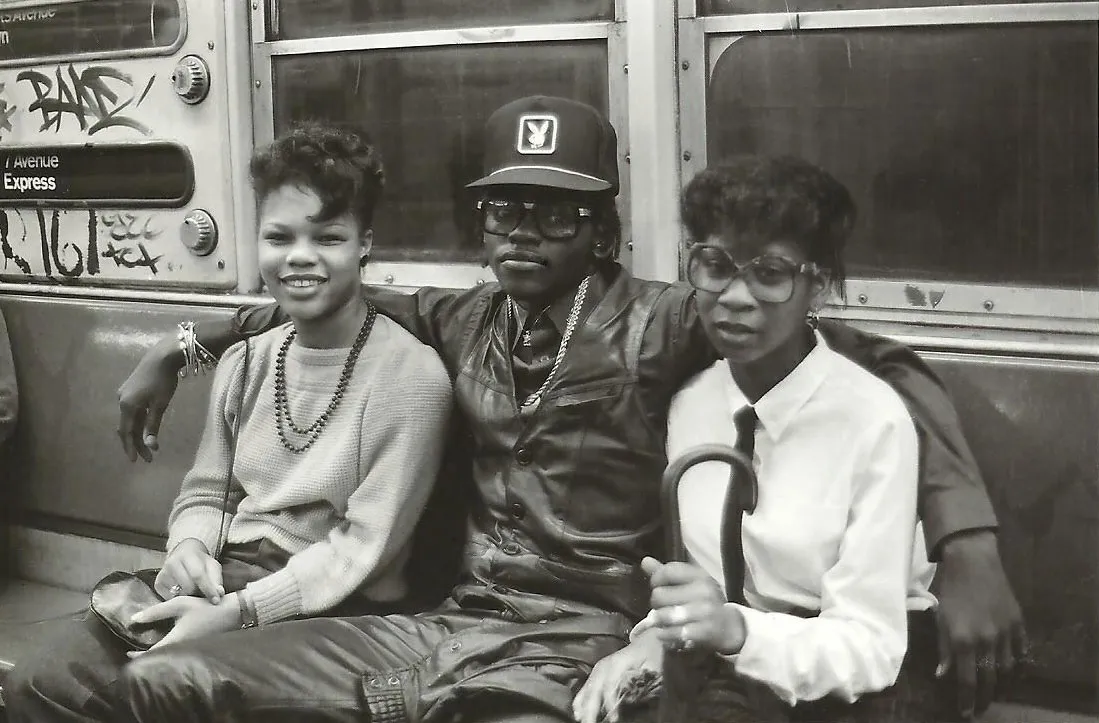

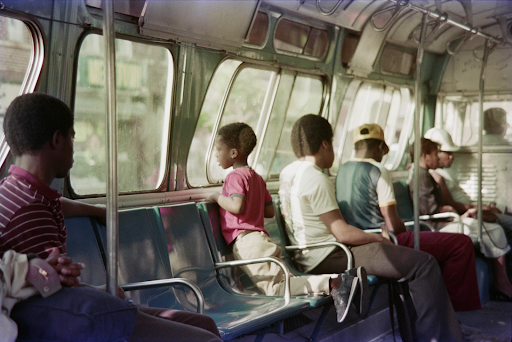

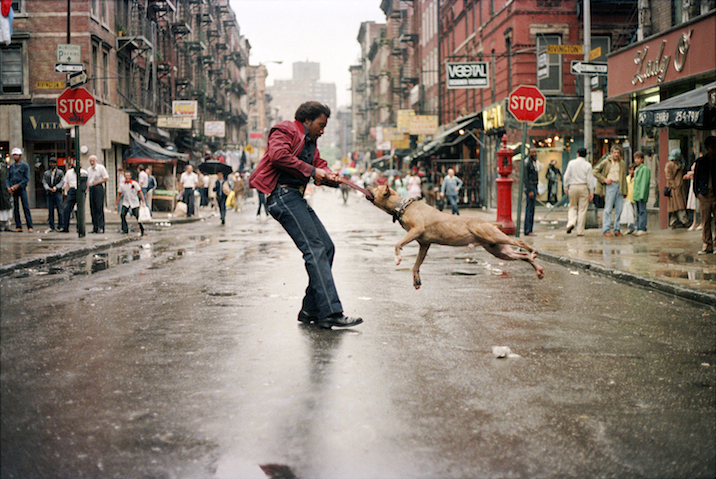
Arms crossed, shoulders rolled back, chin up, eyes fixed on the lens. This is the pose with which Run-DMC introduced themselves to the world. It’s the way generations of rappers have faced the camera. Before it became a universal hip-hop code: the “B-boy stance” was simply how the kids from Brooklyn let Jamel Shabazz photograph them on street corners, on subway platforms, in front of graffiti-covered walls. There was no creative director. There was no brief. There was a twenty-year-old with a Canon AE-1 asking his peers to strike a pose, and they knew exactly how they wanted to be portrayed.
Red Hook, then the world
Jamel Shabazz was born in 1960 in Red Hook, Brooklyn. He grew up in a house full of books, magazines, and music: National Geographic, Life, soul, and early disco. His father was a photographer and passed on a rule that Shabazz would repeat for decades: always carry your camera with you, keep the lens cap off, and have the aperture and shutter ready for any occasion. At fifteen, Shabazz began photographing his neighborhood. At seventeen, he enlisted in the army and was sent to Germany. There, following the example of an older soldier who carried his camera everywhere, photography became more than just a hobby. Meanwhile, Shabazz began reading the poets of the Black Arts Movement (Sonia Sanchez, Nikki Giovanni, Amiri Baraka, to name a few) and translating that political sensibility into images.
Jamel returned to New York in 1980, at a pivotal moment. Hip-hop was exploding in the city’s neighborhoods: not just as music, but as an integrated cultural system encompassing dance, graffiti, fashion, and a code of social behavior. At the same time, industrial decline, unemployment, and the onset of the crack epidemic were devastating the very communities that this culture expressed. Shabazz navigated this landscape with the awareness of someone documenting something fragile and urgent.
Style as an Act of Identity
What Jamel Shabazz photographs between 1980 and 1989 is not fashion in the conventional sense of the term. It is something earlier and more radical: the autonomous invention of a visual language by a community that the fashion system completely ignores. His subjects wear Kangol hats and Cazal sunglasses, Adidas Superstar and Puma Clyde sneakers with wide laces, sheepskin coats and leather jackets, gold chains, and hoop earrings. Every detail is chosen, not imposed. Every combination is a statement of belonging, of pride, of existence in the public sphere.
Shabazz understands something fundamental: you cannot photograph this community while dressing like an outsider. In an interview with Aperture, he acknowledged that his polished and self-aware presentation made his subjects more approachable, because they immediately saw that he spoke the same visual language as the neighborhood. He was an insider. And that sense of belonging translates into an intimacy that his images convey with clarity: the subjects are not caught off guard; they are not objects of study. They are collaborators. They decide the pose, choose the background, and participate in the construction of their own image.
The subway as a photo studio
The locations are an integral part of the work. The streets of Flatbush and East Flatbush, Harlem, the Lower East Side around Orchard and Delancey Street—places where the kids went to buy clothes. And above all, the New York subway. The cars covered in tags and throw-ups become natural backdrops. Boomboxes slung over the shoulder become props. Shabazz transforms New York’s public space into an open-air photo studio, where the background is never neutral: it always conveys social, economic, and aesthetic information.
In 1983, Jamel Shabazz made a decision that speaks volumes about his view of photography as a community responsibility: he accepted a job with the New York Department of Corrections, which took him to Rikers Island and the Manhattan Supreme Court, where he worked with inmates with mental health issues. Photography is never separate from social commitment. In his practice, the two go hand in hand.
An Archive Before the Industry
In 2001, Shabazz published *Back in the Days* for powerHouse Books, with an introduction by Fab 5 Freddy. The book collects eighty color and black-and-white photographs taken between 1980 and 1989 and documents the hip-hop scene before it became a multibillion-dollar industry. Before brands planned their campaigns, the streets dictated the rules of style. The book became a reference work, not only for photography but for the entire hip-hop culture, and has remained in print for over twenty years.
Since then, Jamel Shabazz’s influence has extended far beyond documentary photography. He has published twelve monographs, including “A Time Before Crack” and “Seconds of My Life.” His photographs have been acquired for the permanent collections of the Whitney Museum, the Smithsonian’s National Museum of African American History and Culture, the Getty Museum, and the Fashion Institute of Technology. In 2018, he received the Gordon Parks Award. He works as an editorial photographer for Vogue, The New York Times, Dazed, The New Yorker, and W Magazine. In 2013, Charlie Ahearn (director of the seminal 1983 hip-hop documentary *Wild Style*) dedicated the film *Jamel Shabazz: Street Photographer* to him.
Twenty Years Ahead of His Time
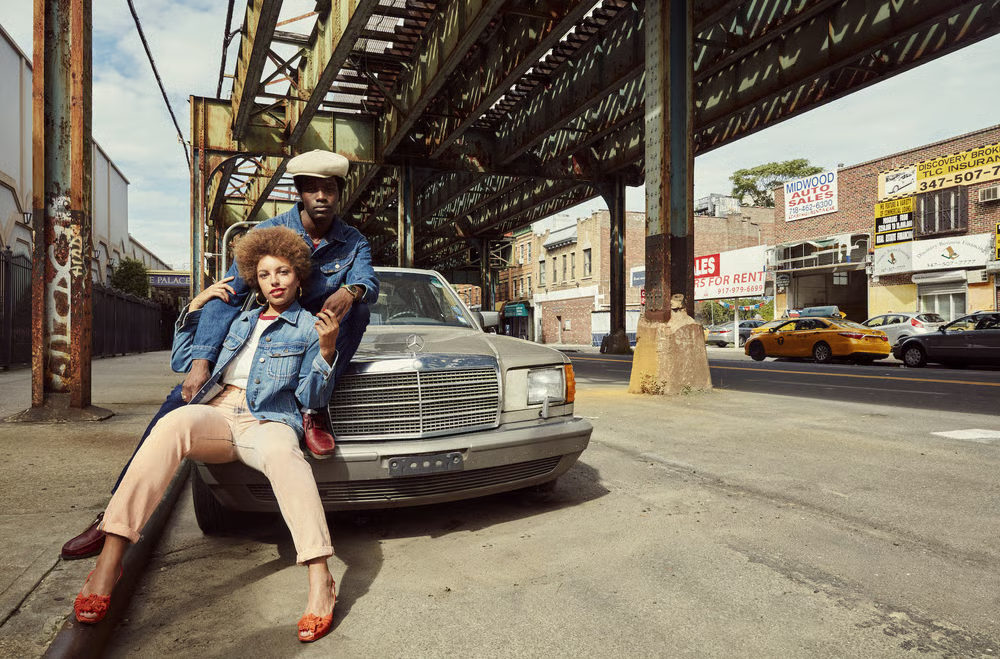
There is one detail that illuminates the cultural significance of Shabazz’s work: his most recent book, “Drama & Flava,” draws for the first time a direct line between his 1980s street photography and his contemporary editorial work for major fashion publications. The same energy, the same attention to detail, the same collaboration with the subject. The difference is that in the 1980s, no one called all this “street style.” The term, the concept, the industry that grew out of it: all of that came later.
Jamel Shabazz was there first. His images do not document a trend. They document the moment when a community invented its own visual vocabulary, twenty years ahead of the world that would try to replicate it. Every pose, every outfit combination, every glance at the camera is proof that style, before being a product, is an act of self-determination. Shabazz understood this in 1980. The fashion industry caught on much later.


Comments